LEAVING FOR A KNOWN DESTINATION
Keep the personal load compact
Focus on documents, personal necessities, phone power, a light, water and a change of clothes. Plan where additional supplies will be waiting.
DIY GO-BAG · CHOOSE THE BACKPACK
Start with a backpack you own. Replace it when your supplies do not fit, the straps are uncomfortable or the bag cannot handle the load.
Compare the optionsEmpty a school, work or travel backpack. Check the seams, zippers and straps. Pack the supplies you actually plan to carry, including filled water bottles. A bag that closes and feels manageable is a useful starting point.
LEAVING FOR A KNOWN DESTINATION
Focus on documents, personal necessities, phone power, a light, water and a change of clothes. Plan where additional supplies will be waiting.
BULKY CLOTHING OR EXTRA SUPPLIES
Lay out the extra items. Decide what another adult or your vehicle can carry. A larger backpack should solve a specific space or carrying problem.
Choose for your load, fit and destination. These are empty bags; supplies are separate. Budget and midrange packs suit smaller loads, while the premium pair adds more carrying support.
Manufacturer prices checked September 11, 2026, before tax and shipping. Prices and availability can change with color, size and seller. These are comparison reference prices, not live Amazon prices.
| Backpack | Tier and reference price | Capacity | Empty weight |
|---|---|---|---|
 REI Co-op Flash 22 (opens in a new tab) | Budget · $59.95 | 22 L | 0.875 lb |
 Quechua NH500 Escape 23 L (opens in a new tab) | Budget · $69.99 | 23 L | 2 lb |
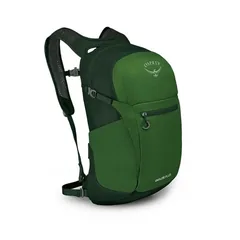 Osprey Daylite Plus (opens in a new tab) | Midrange · $80.00 | 20 L | 1.29 lb |
 REI Co-op Trail 25 — XS–XL (opens in a new tab) | Midrange · $99.95 | 25 L | 1.81 lb |
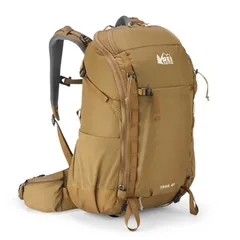 REI Co-op Trail 40 — men’s S–M (opens in a new tab) | Premium · $159.00 | 40 L | 2.75 lb |
 Osprey Stratos 36 — current version (opens in a new tab) | Premium · $240.00 | 36 L | 3.41 lb |
Two simpler choices: lower empty weight or more everyday organization.
 (opens in a new tab)
Budget · $59.95 at review
Fits: A compact kit when keeping the empty bag light matters.
Why consider: Drawcord top, bottle pockets and a removable back pad keep the design simple.
Tradeoff: Frameless construction offers less load support. No raincover is included.
Standard Flash 22, item 227953; 14 oz. Published torso fit is 16–21 inches. Not the Flash 18.
Manufacturer specifications and product photo. Research-based comparison; not hands-on testing.
 (opens in a new tab)
Budget · $69.99 at review
Fits: Work and short trips where organized compartments matter more than minimum bag weight.
Why consider: Separate compartments and laptop storage help keep daily items and departure essentials sorted.
Tradeoff: Heavier than the Flash 22 despite similar capacity; organization is not a substitute for a supportive load-bearing frame.
23 L zip-opening NH500 Escape, model 334344; not the rolltop or 32 L version.
Manufacturer specifications and product photo. Research-based comparison; not hands-on testing.
Two modest steps up: compact everyday access or more room with a raincover.
 (opens in a new tab)
Midrange · $80.00 at review
Fits: A small personal load with supplies waiting at your destination.
Why consider: Panel access and bottle pockets help keep everyday essentials easy to reach.
Tradeoff: Limited room for bulky bedding. Its thin webbing belt is not a padded load-bearing hipbelt.
Daylite Plus, 20-liter version. Do not substitute the smaller Daylite.
Manufacturer specifications and product photo. Research-based comparison; not hands-on testing.
 (opens in a new tab)
Midrange · $99.95 at review
Fits: A modest step up in space for extra clothing and everyday supplies.
Why consider: Panel access, an HDPE framesheet and included raincover add structure and convenience.
Tradeoff: The framesheet and webbing hipbelt do not provide the same support as the framed Trail 40.
XS–XL weighs 1 lb 13 oz; XXL–4XL weighs 1 lb 14 oz. Both are 25 L. Choose by the listed torso and hip measurements.
Manufacturer specifications and product photo. Research-based comparison; not hands-on testing.
Two supported packs: more capacity or adjustable fit and ventilation. Paying more does not guarantee a better fit.
 (opens in a new tab)
Premium · $159.00 at review
Fits: Bulkier personal supplies when a compact pack will not fit the load.
Why consider: A steel perimeter frame, hipbelt and wide-opening compartment add support and access. Raincover included.
Tradeoff: More empty weight and room to overpack. Try the loaded pack; capacity alone does not establish fit.
Figures are for men’s S–M. L–XL and XXL–4XL are 41 L and heavier. Choose by torso and hip fit, not height alone.
Manufacturer specifications and product photo. Research-based comparison; not hands-on testing.
 (opens in a new tab)
Premium · $240.00 at review
Fits: A longer carry when adjustable torso fit and a ventilated back panel justify the extra cost.
Why consider: Suspended mesh, a peripheral frame, padded hipbelt and included raincover distinguish it from a simple daypack.
Tradeoff: Heaviest choice here, with less capacity than the Trail 40. Paying more does not automatically make it the better fit.
Current Stratos 36 on the stratos-3 page, O/S men’s fit; 36 L and 3.41 lb. Older Stratos listings have different specifications.
Manufacturer specifications and product photo. Research-based comparison; not hands-on testing.
01 · LOAD IT
Include filled bottles and bulky clothing. Keep dense items close to your back and frequently needed items accessible.
02 · MOVE WITH IT
Adjust the straps, then walk and try stairs if appropriate for you. Stop for pain, numbness or instability. Reduce or redistribute the load.
03 · FIND SOMETHING
Can you get a light, phone or document pouch without unpacking the bag? Reorganize before adding more pockets or accessories.
A short check can expose obvious problems; it does not prove you can carry the pack through an evacuation. Mobility, health, distance and weather affect your plan. REI’s backpack fit guidance (opens in a new tab) explains torso sizing and adjustments.
Identification, essential contact information, phone and a light. Keep sensitive documents protected from water.
Personal supplies and clothing grouped in simple pouches or bags. Protect items that need to stay dry; a raincover alone does not seal a backpack.
Additional water, bulky bedding and household reserves. Assign them to home, transport or a destination instead of assuming they all belong on your back.
We compared published capacity, empty weight, access and support features for different household tasks. We have not worn or durability-tested these packs. Fit judgments are practical selection guidance, not test results. We left out candidates when the available information did not clearly match the current version. An existing bag remains the first option.